
Shop Now
- ALUMINIUM HORSESHOES
- STEEL HORSESHOES
- THERAPEUTIC HORSESHOES
- HORSESHOE NAILS
- RASPS
- TOOLS
- WORKSHOP EQUIPMENT
- CARE
- MUSTAD MERCHANDISE
Blog Archives
Stay Connected Blog Categories
Farrier TipsTips and Tricks
Equine InfoHoof Conditions
General
Guest AuthorsCarl O'Dwyer
|



A Clinical Exploration of Laminitis & Founder
It’s that time of the year when things are starting to warm up. Not just the horse events and breeding but also the time when we need to be most aware of laminitis. So, what are laminitis and founder? And how do they differ? Hopefully by the end of this blog I will help you understand a little more about this most debilitating problem.
What Is Laminitis:
Firstly, laminitis was originally known as barley disease as far back as 350BC. The terms laminitis and founder are often used by clients incorrectly as laminitis is the condition and founder one of the results of the laminitis.
Laminitis is the inflammation of the lamina attachment of a horse’s hoof. Itis is a word that stems from Greek origins it is a medical term used to describe inflammatory diseases example: bronchitis (inflammation of the bronchial tubes) Arthritis (inflammation of the articular cartilage) and so on.
Laminitis is a whole horse concept, thus it should be treated as such. This means the prevention and subsequent treatment protocols are a team effort that should involve the owner as well as a veterinarian and farrier working together to produce the best possible outcome.
What Is Founder:
Founder is a sequel to laminitis, a horse will first get laminitis, if the laminitis progresses without intervention and becomes chronic, chances are the horse will founder. Founder can be described as the foundations of the lamina attachment breaking down, the term founder is thought to derive from the English language to describe a ship foundering or sinking.
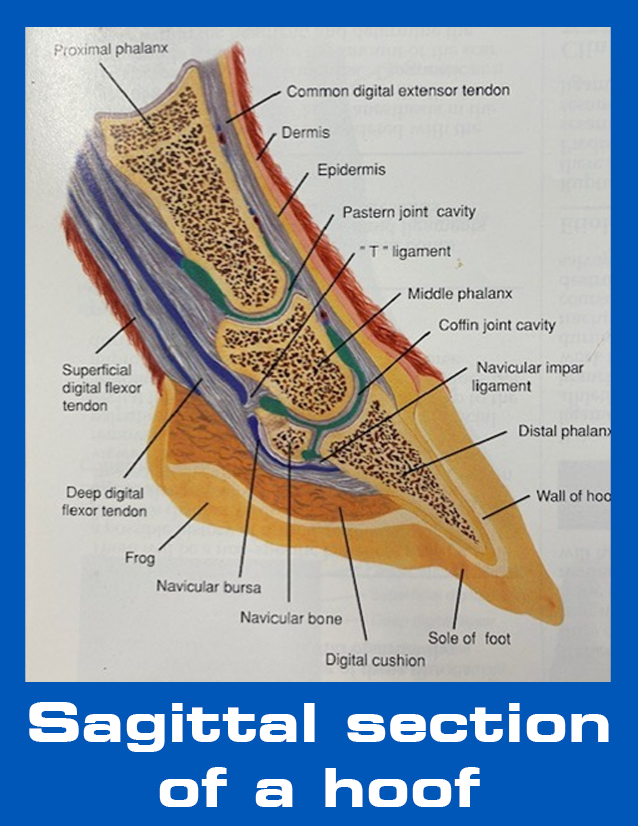 |
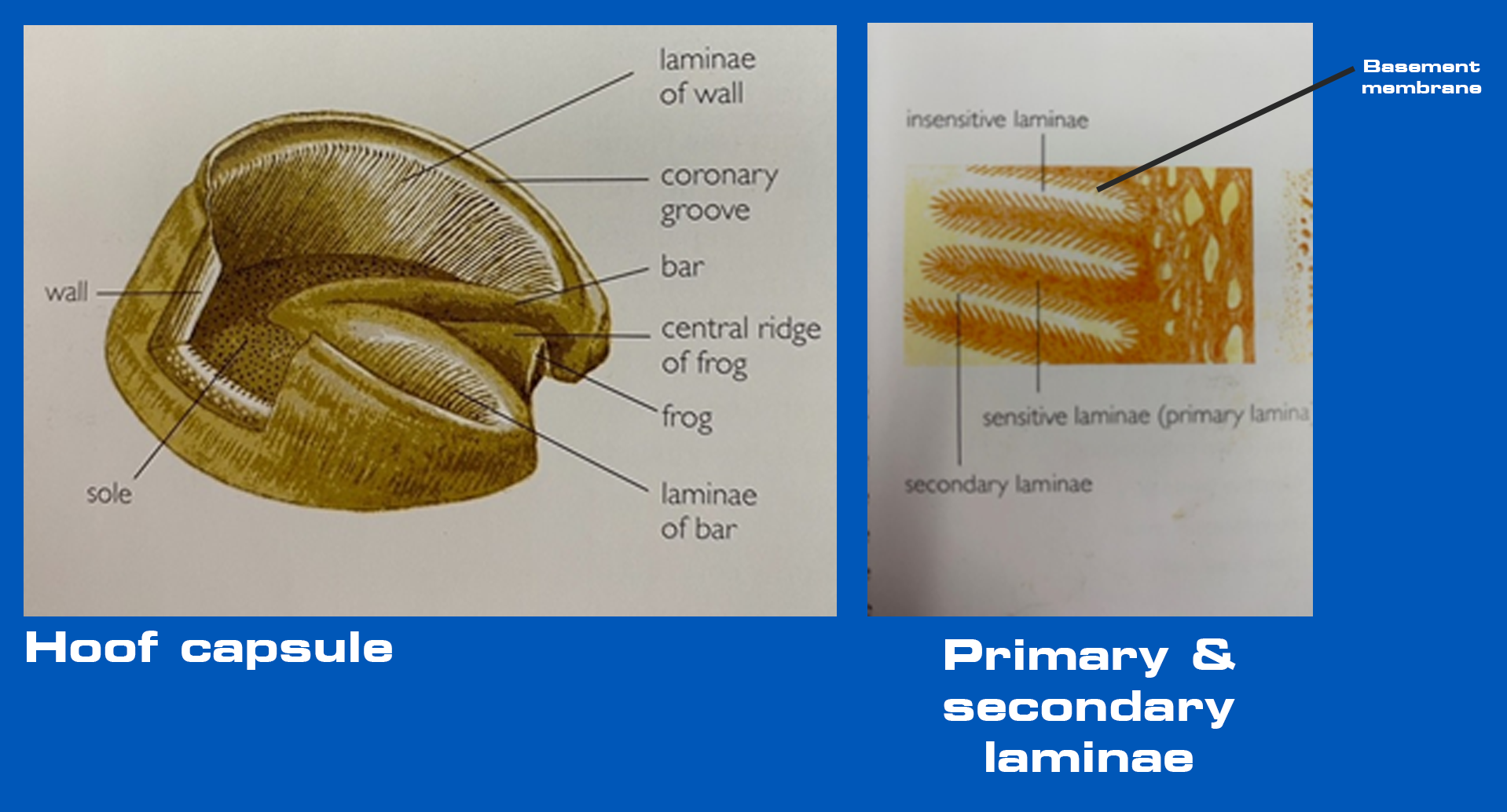
Hoof Anatomy Of LaminitisAs I mentioned earlier Laminitis involves the horse as a whole. However, from a farriery perspective the anatomy associated with laminitis involves the lamina attachment. This is where the sensitive lamina dove tails together with the insensitive lamina. A horse has approximately 500 to 700 primary laminae in each foot and 100 secondary laminar to each primary lamina. These laminas attach the hoof wall to the distal phalanx (pedal bone) between the lamina is the basement membrane which acts as a filter for the blood and nutrients entering the hoof. Laminitis is the inflammation of this area. Depending on the severity of the initial insult this involve the blood supply, hoof wall, sole, distal phalanx and deep digital flexor tendon. |
What Causes Initial Insult Laminitis?
Even though laminitis has plagued horses for centuries, science is still seeking answers to better understand causes and hopefully block the triggering of laminitis. Australia boasts one of the world leading researchers in to this disease, Prof. Chris Pollitt, BVSc, PhD. His book (The Illustrated Horse’s Foot), will give you more in-depth information than this short introductory blog can do.
However, I will describe some of the triggers we know of:
- Diet - Obesity
- Toxaemia: Intestinal infections, retained placenta in mares, colic
- Hormonal
- Excessive strain: over excessive weight bearing on a foot due to injury
- Drug related
The Four Theories Of Laminitis
There are 4 common theory’s that attempt to explain laminitis they are:
Vascular Theory:
The vascular theory is widely supported by experimental evidence. This theory suggests that the initial insult to the lamina is vasoconstriction whether it be from the gut in cases of dietary laminitis /obesity or from infection sepsis or via an organ such as the liver.
Vasoconstriction affects the veins and this is thought to increase pressure in the blood capillaries, this increase in pressure causes the fluid to enter the surrounding tissues thus causing pain.
With the increase in blood pressure this blood is diverted through a rich network of arteriovenous anastomoses or (AVA’s) directly into the veins, therefore there is an increase in systemic blood pressure increasing the blood flow to the foot and this in turn, causes the blood to clot increasing pressure more causing more pain to the horse.
Toxic Theory:
The toxic theory suggests that the increase in blood flow as in the vascular theory do occur. However, the initial insult is thought to be damage to the basement membrane this separates the lamina attachment.
This theory suggests that a toxin (endotoxin of Streptococcus Bovis) may be responsible for the initial damage to the basement membrane Prof. Chris Pollitt, BVSc, PhD)
Metabolic Theory:
The metabolic theory is similar to the toxic theory, however, rather than the damage to the basement membrane being caused by toxin this theory suggests the damage is caused by altered metabolism in particular depletion of glucose.
Mechanical Theory:
The mechanical theory suggests trauma or excessive weight bearing sometimes referred to as road founder or sinking, cause repeated trauma and stress to the lamina attachments and cause the cohesion between the sensitive and insensitive lamina to breakdown.
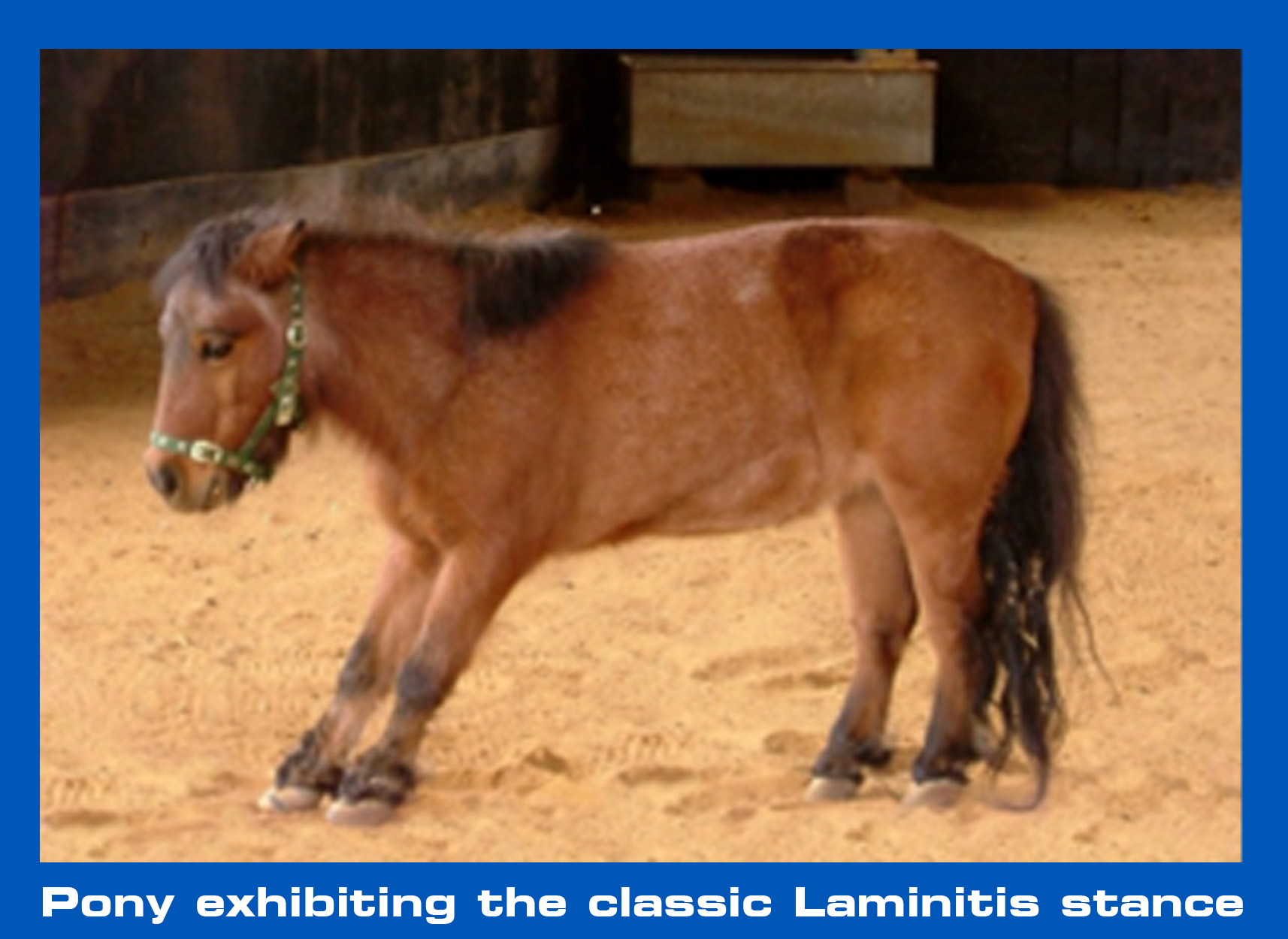
Identifying LaminitisThe classic signs of the onset of laminitis:
|
 |
Laminitis Treatment
In the event you suspect your horse may have the onset of laminitis. The first thing you should do is contact a veterinarian. Laminitis involves the horse as a whole so your vet will recommend a treatment plan. This plan may include any dietary changes or blood tests the vet deems necessary, placing the horse in a soft sand yard or on soft bedding, and/or any pain relief the vet feels is necessary.
Farrier Treatment For Laminitis
There are many ways in which a farrier can assist with laminitis after the initial insult has dissipated. The farrier should work closely with both the veterinarian and the owner for the best possible outcome.
It has been my experience that while the horse is suffering from the initial insult it is often too painful for the horse to be able to bare weight enough to undertake farriery. Usually during this period, the best treatment from a farrier perspective is to tape thick foam pads to the horse until the initial insult period has dissipated enough to do something more substantial.
After this initial insult has dissipated, this is the time that application of support shoes or other hoof treatment procedures can be performed. There are a number of techniques available for the farrier today.
Therapeutic Bar Shoes
One tried and proven method is the application of a support shoe such as a bar shoe or heart bar shoe. The application of a heart bar shoe should be assisted by x-rays from the vet to ascertain the correct length of the heart bar for maximum effect. In my practice I make my own bar shoes from aluminium in these cases. The reason for this is that I can achieve maximum cover and support with minimum weight therefore the shoe does not require many nails to be secured. There are a number of other types of shoes that may be applied to stabilize the hoof capsule and maintain the horse once things have settled down. Many horses, if the insult has not been too dramatic, will return to normal work and may be maintained by using 3d pads with impression material, or an equilibrium shoe with a rolled toe or similar.

Clogs
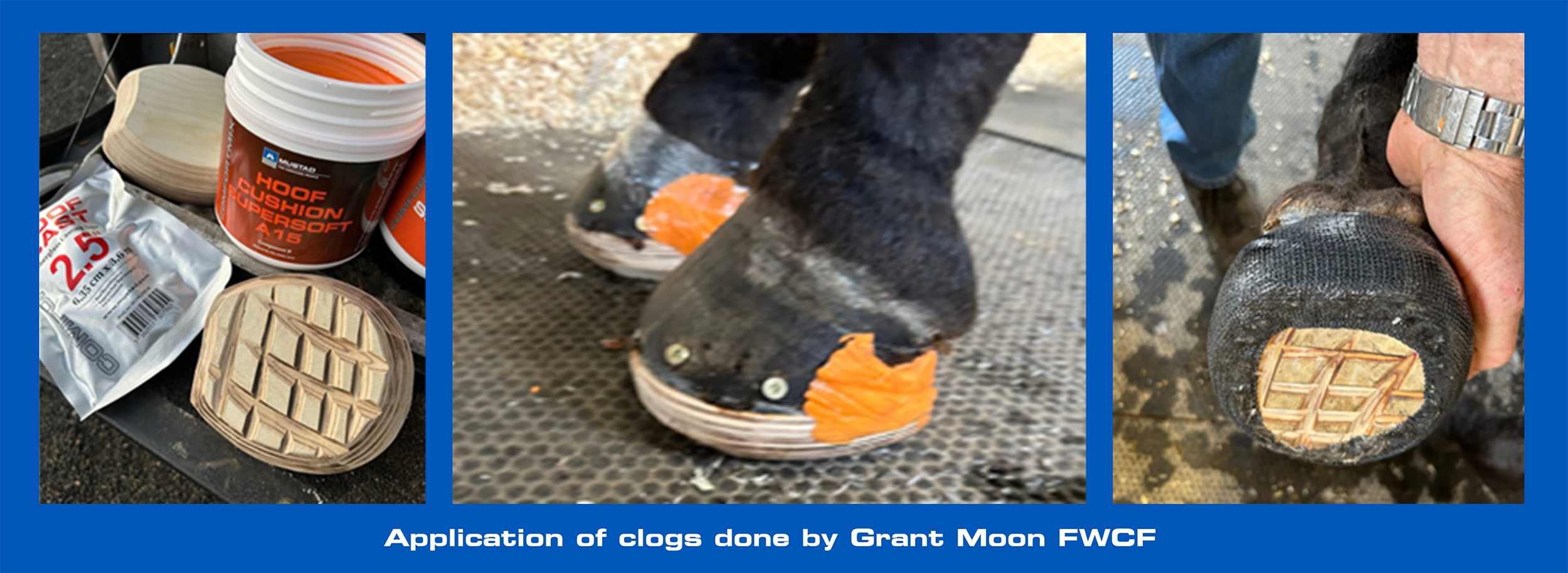
Clogs are another method used by farriers to assist laminitis. Clogs can be formed out of Plyboard to fit the horse or 3d printed then applied using either screws and/or hoof cast - the advantage of this method is that nails are not required.
The Progression Of Laminitis To FounderIn cases where the laminitis insult is severe the horse may progress to a chronic laminetic case and then on to acute founder or possibly chronic founder. This is a worst-case scenario. With early diagnosis and intervention hopefully, this scenario can be avoided but unfortunately some horses will progress to this stage and may no longer be sound or have to be euthanised. These horses will have a multitude of changes due to the progression of the disease that will include rotation of the distal phalanx (pedal bone) due to the breakdown of the laminae attachment, thin sole, lamina wedge, pronounced growth rings, abscessing. |
 |
Laminitis Prevention
Prevention is always better than cure for obvious reasons, one thing that I have seen far too many times is a small pony in a paddock with a larger horse and both get fed the same amount! Common sense should tell us a small horse does not need the same amount of food as a large horse. Simply put, many horses get over fed and do very minimal work - although this refers to dietary laminitis, it is more common than you think.
Obesity is modern day issue within humans and the culture we see carries on to the animals we care for. Ensuring that your horse is not over fed is one easy way to prevent the pain and cost of this debilitating disease. Asking your veterinarian about dietary management for your horse is a great idea if your new to horse ownership.
I hope this short introduction to laminitis has given you an insight as to what laminitis is, the differences between laminitis and founder, some of the causes, theories and treatments and some ideas for prevention. I hope you never have to see a horse with this most debilitating problem.
If you wish to study this disease more in depth I recommend reading (Corrective Farriery by. Dr. Simon Curtis FWCF) and (The Illustrated Horse’s Foot, Prof. Chris Pollitt, BVSc, PhD).
Until next time all the best
Dean Lewis CJF, AWCF